Hello,
Here in this post I will solve some basic coding interview question. This time I used python. Yes its cool.
Find second largest number in given array?
input: [0,1,-1,-2] output: 0
input: [3] output:
input: [] output:
Blog about Java, Spring Boot, Hibernate, CSS, HTML, Interview questions and Programming
Hello,
Here in this post I will solve some basic coding interview question. This time I used python. Yes its cool.
Find second largest number in given array?
After resolve this error, ng serve brings up new error.
Error: The Angular Compiler requires TypeScript >=4.2.3 and <4.4.0 but 4.6.3 was found instead.
So again version mismatch, but this time error it self it clear so I easily fixed this error like pro.
Again I changed typescript version from "typescript": "^4.3.5" to "typescript": "4.3.5".
changed What happen when we have while doing npm install angular finds most recent version of typescript, in package-lock.json "typescript": "4.6.3" is got update. so I have change "typescript": "4.3.5" in package.json.
This solved my issue.
Conclusion: If you face any weird error from core/webpack or any check your typescript and angular version between package.json and package-lock.json so that we can find between what you expected to load to build and what angular try to find.
While trying to run ng serve on my angular project I got below error,
After spending lot of time on 'npm cache clean --fix' and deleting node_module, we have find that typescript version is creating problem here. So I upgrade my "typescript": "3.6.5" to "typescript": "^4.3.5"
This solved my issue.
After that I run ng serve. There I got new error.
Thank you!.
I tried to add couple of new entity classes in my project, service implementation and repository for those entity. Once after all done I tried to run my application, my IDE show up to below exception to me.
"org.springframework.beans.factory.BeanCreationException: Error creating bean with name 'customerRepo' defined in com.example.demo.repo.CustomerRepo defined in @EnableJpaRepositories declared on DemoApplication: Invocation of init method failed; nested exception is java.lang.IllegalArgumentException: Not a managed type: class com.example.demo.entity.Customer"
Here my Repo and Customer class
public interface CustomerRepo extends JpaRepository<Customer, Integer> {
}
public class Customer {
private Integer id;
private String name;
private String mobile;
private String email;
}
Its clearly says Customer class is not able to manage by JpaRepository. So JPA not able to consider this Customer class as entity. Because I used Customer class in Repo class as JpaRepository.
Here the mistake is I forget to change the POJO to Entity. I missed to annotate Customer class with @Entity.
@Entity
@Table(name= "customer", schema = "public")
public class Customer {
So we need to add @Entity annotation to tell jpa this is a entity class to resolve this error.
This solve the above exception.
I have faced "
spring.autoconfigure.exclude=org.springframework.boot.autoconfigure.jdbc.DataSourceAutoConfiguration
Recent day interviews you may faced this question in programing interview. Find the sub string palindrome of given string input.
We have many way to solve it. Here I added coding snippet which I tried to solve it.
First one I used two for loop to solve it. Its very simple and easy.
private static List<String> subStringPalindrome(String value) {
List<String> list = new ArrayList<>();
for(int i =0 ; i < value.length(); i++){
for(int j = i+1 ; j < value.length(); j++){
StringBuffer s1 = new StringBuffer(value.substring(i,j));
String s2 = s1.reverse().toString();
if(value.substring(i,j).contentEquals(s2) && s1.length()> 1){
list.add(s1.toString());
}
}
}
return list;
}
List<String> list = subStringPalindrome("eetestseeammadam");Output: [ee, ete, estse, sts, ee, amma, mm, ada]Its very simple and easy. This code look simple and easy and I tried another way using recursion.private static List<String> printPalindromeSubString(String value;) {
List<String> list = new ArrayList<>();
if(value.equals(new StringBuilder(value).reverse()))
list.add(value);
for(int i=0; i <= value.length(); i++){
if(i > 1 && i < value.length() -1){
StringBuffer reverse = new StringBuffer(value.substring(i-2, i+1));
if(value.substring(i-2, i+1).contentEquals(reverse.reverse())){
System.out.println("Called2");
list.add(value.substring(i-2, i+1));
if(i>2){
if(i+2 <= value.length()){
new Test().callRecursion(value,value.substring(i-2, i+1), i-1, i, list );
}
}
}
}
if(i > 0 && i < value.length() ){
StringBuffer stringBuffer = new StringBuffer(value.substring(i-1, i+1));
if(value.substring(i-1, i+1).contentEquals(stringBuffer.reverse())){
list.add(value.substring(i-1, i+1));
System.out.println("Called");
if(i > 1){
new Test().callRecursion(value,value.substring(i-1, i+1), i, i, list );
}
}
}
}
return list;
}
private List<String> callRecursion(String value, String reversed, int i, int j, List<String> list){
if(j+1 >= value.length())
return list;
else if(value.charAt(i-2) == value.charAt(j+1)){
String s = value.charAt(i-2) +reversed+ value.charAt(j+1);
list.add(s);
callRecursion(value, s, i-1, j+1, list);
}
System.out.println(list);
return list;
}List<String> list = printPalindromeSubString("eetestseeammadam");Here i used recursion to find palindrome on given substring. And the output is[ee, ete, sts, estse, ee, mm, amma, ada, madam]And the output is If you check the output from two logic, there is a mismatch.. First one print only 8 palindrome and recursion logic print 9 palindrome. 'madam' missing in first logic.Lets make this blog more interactive with techies, Please find the missing condition or part of code on comment area.✌✌Thanks in advance.
In this post we will going to discuss about what is lambda expression in java?. How to use them?. How it helps developers?. All this question will be answered end of this post.
Before we start answering this question, let we look in to some implementation to get 10+years experience employee from list of employee object.
Here coding snippet:
public class Employee {
private int id;
private String name;
private double experience;
private long salary;
private int rating;
public Employee(int id, String name, double experience, long salary, int rating) {
this.id = id;
this.name = name;
this.experience = experience;
this.salary = salary;
this.rating = rating;
}
//Getter and Setter here}
Here my implementation class to print 10+years experience employee.
public static void main(String[] args) {
Employee employee1 = new Employee(5, "Antwaun", 5.5, 10000L, 1);
Employee employee2 = new Employee(2, "Rick", 32.5, 2000L, 3);
Employee employee3 = new Employee(1, "Richard", 50, 3000L, 4);
Employee employee4 = new Employee(3, "Corey", 22.5, 20000L, 2);
Employee employee5 = new Employee(4, "Chumlee", 10.5, 15000L, 5);
List<Employee> employeeList = new ArrayList<>();
employeeList.add(employee1);
employeeList.add(employee2);
employeeList.add(employee3);
employeeList.add(employee4);
employeeList.add(employee5);
printEmployeeExpGreaterTenYears(employeeList);
}
public static void printEmployeeExpGreaterTenYears(List<Employee> employeeList){
for(Employee employee: employeeList){
if(employee.getExperience() >= 10){
System.out.println(employee);
}
}
}
Output:
Employee{id=2, name='Rick', experience=32.5, salary=2000, rating=3} Employee{id=1, name='Richard', experience=50.0, salary=3000, rating=4} Employee{id=3, name='Corey', experience=22.5, salary=20000, rating=2} Employee{id=4, name='Chumlee', experience=10.5, salary=15000, rating=5}
This looks good. we are iterating list and check the experience grater or equals to 10. If in future the requirement change like we need to get 10+ experience and rating will be more than 4+. So then we need to change the existing logic or else we need to write a new method with two param.
Let see the implementation,public static void printEmployeeExpGreaterTenYearsAndSalaryPassed(
List<Employee> employeeList, int rating){
for(Employee employee: employeeList){
if(employee.getExperience() >= 10 && employee.getRating() >= rating){
System.out.println(employee);
}
}
}
These condition may be change in future. Like employee salary, employee name or we may add some new variable in Employee class. So its not good to change existing logic or add new logic when we have new enhancement to be implement.So what else we can do?? .. Let think about Functional Interface in java 8.
Let we create a Function interface with one abstract method. Interface name CheckEmployee for now have method name test().
public interface CheckEmployee {
boolean test(Employee employee);
}Here we need to implement this test method, so I have created CheckEmployeeService class.public class CheckEmployeeService implements CheckEmployee {
@Override
public boolean test(Employee employee) {
return (employee.getExperience() >= 10 && employee.getRating() >= 4);
}
}Let add a method to printEmployee in out Impl class.public static void printPersons(
List<Employee> employeeList, CheckEmployee checkEmployee){
for(Employee employee: employeeList){
if(checkEmployee.test(employee)){
System.out.println(employee);
}
}
}Now we can call this printPersons method from main method,printPersons(employeeList, new CheckEmployeeService());Output:Employee{id=1, name='Richard', experience=50.0, salary=3000, rating=4} Employee{id=4, name='Chumlee', experience=10.5, salary=15000, rating=5}Its looks good. but we have created a Interface and Service class, that's not necessary we can create them inside the Impl class itself.As already said CheckPerson interace is Functional interface. Because it has one and only abstract method. Java provide lambda operation for functional interface. We can use lambda expression on functional interface.Let see how we can use them,printPersons(employeeList, new CheckEmployeeService());
System.out.println("Lambda expression ");
printPersons(employeeList,
(Employee employee) -> employee.getExperience() >= 10 && employee.getRating() >= 4);Output:Employee{id=1, name='Richard', experience=50.0, salary=3000, rating=4} Employee{id=4, name='Chumlee', experience=10.5, salary=15000, rating=5} Lambda expression Employee{id=1, name='Richard', experience=50.0, salary=3000, rating=4} Employee{id=4, name='Chumlee', experience=10.5, salary=15000, rating=5}Now you might get idea of how do we use lambda expression in java 8. In Functional interface we can use lambda expression. By using lambda expression it reduces the coding effort. Java provide many Functional interface, they all available in java.util.functionFor example we can use you can use thePredicate<T>interface in place ofCheckEmployee. This interface contains the methodboolean test(T t).Let see how to use predicate interface instead of CheckEmployee.public static void printEmployeesWithPredicate(
List<Employee> roster, Predicate<Employee> tester) {
for (Employee p : roster) {
if (tester.test(p)) {
System.out.println(p);
}
}
}call from main method,printEmployeesWithPredicate(employeeList,
(Employee employee) -> employee.getExperience() >= 10 && employee.getRating() >= 4);This will print the same output ass like what we have printed by using CheckEmployee interface. So far we have answered what is lambda expression, how to use them and how it helps developer to reduce the coding effort. I hope this will give some basic and deep understanding of lambda expression.There are lot of Functional interface we have in java. Please go through the JavaDoc . So When we are speaking about lambda expression you might think of Steams.. Are you??. Okay. Let see how to we use Stream to printPersion.Classes to support functional-style operations on streams of elements,
such as map-reduce transformations on collections. - JavaDoc .Stream support functional style operation on stream element. Let we use stream element to printPersons. Here code snippet.employeeList
.stream()
.filter(
employee -> employee.getExperience() >= 10 && employee.getRating() >= 4)
.forEach(employee -> System.out.println(employee));This will print the same output ass like what we have printed by using CheckEmployee interface.I hope this will give some basic and deep understanding of lambda expression and stream.Thank you all.Consolidated Coding snippet.package com.example.monitoring.lambda;
import com.example.monitoring.compare.CheckEmployee;
import com.example.monitoring.compare.CheckEmployeeService;
import com.example.monitoring.compare.Employee;
import java.util.ArrayList;
import java.util.List;
import java.util.function.Predicate;
public class EmployeeServiceImpl {
public static void main(String[] args) {
Employee employee1 = new Employee(5, "Antwaun", 5.5, 10000L, 1);
Employee employee2 = new Employee(2, "Rick", 32.5, 2000L, 3);
Employee employee3 = new Employee(1, "Richard", 50, 3000L, 4);
Employee employee4 = new Employee(3, "Corey", 22.5, 20000L, 2);
Employee employee5 = new Employee(4, "Chumlee", 10.5, 15000L, 5);
List<Employee> employeeList = new ArrayList<>();
employeeList.add(employee1);
employeeList.add(employee2);
employeeList.add(employee3);
employeeList.add(employee4);
employeeList.add(employee5);
printEmployeeExpGreaterTenYears(employeeList);
printPersons(employeeList, new CheckEmployeeService());
System.out.println("Lambda expression ");
printPersons(employeeList,
(Employee employee) -> employee.getExperience() >= 10 && employee.getRating() >= 4);
printEmployeesWithPredicate(employeeList,
(Employee employee) -> employee.getExperience() >= 10 && employee.getRating() >= 4);
employeeList
.stream()
.filter(
employee -> employee.getExperience() >= 10 && employee.getRating() >= 4)
.forEach(employee -> System.out.println(employee));
}
public static void printEmployeeExpGreaterTenYears(List<Employee> employeeList){
for(Employee employee: employeeList){
if(employee.getExperience() >= 10){
System.out.println(employee);
}
}
}
public static void printEmployeeExpGreaterTenYearsAndSalaryPassed(
List<Employee> employeeList, int rating){
for(Employee employee: employeeList){
if(employee.getExperience() >= 10 && employee.getRating() >= rating){
System.out.println(employee);
}
}
}
public static void printPersons(
List<Employee> employeeList, CheckEmployee checkEmployee){
for(Employee employee: employeeList){
if(checkEmployee.test(employee)){
System.out.println(employee);
}
}
}
public static void printEmployeesWithPredicate(
List<Employee> roster, Predicate<Employee> tester) {
for (Employee p : roster) {
if (tester.test(p)) {
System.out.println(p);
}
}
}
}
This is very popular interview question in core java interview. Most of us will answer it, String is immutable. When the question is goes why String is immutable, few of us only answer it, due to misunderstanding of immutable.
Here we will discuss about why?.
Immutable is, once a string object created in string pool or heap we cannot change the value of it. But we can change the value of the reference. That's what we are doing in below code.
String name = "Boomi";
name = "raj";
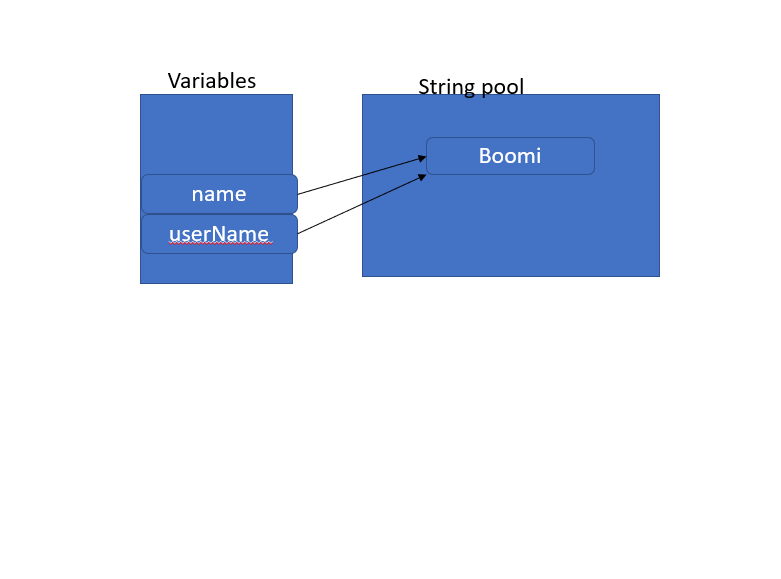
But we are able to change it right??. Its not what immutable means. Immutable means we cannot edit the "Boomi" from string pool. Let see how above string stored in java memory.
When we create name = "Boomi"; value "Boomi" will be create in string pool and assigned this value to name reference.
Now you may have a question why java engineers made string as immutable.
Let see an example to understand why string immutable?
String name = "Boomi";
String userName = "Boomi";
Here we are creating two string with same name. If String is mutable then we need to create two time value "Boomi". So it might consume lot of memory for real time application.
Another reason for String immutability is security.
name = "Boomiraj";New Object will be created for "Boomiraj" this referred to name variable. userName still referring to the "Boomi".
We know we can create String object two ways,
String name = "Boomi";
String userName = "Boomiraj";
String nameObj = new String("Boomi");
String userNameObj = new String("Boomiraj");
System.out.println(name == nameObj); //false
System.out.println(userName == userNameObj);//false
Here we will discuss about what is nullpointerexception and how to fix it?
In java if a variable or object reference do not have any value to assign to them , then we will have possibility of having null pointer exception. More clearly if a reference variable or object is assigned to nothing. For example,
public class NullPointerException {
public static void main(String[] args) {
Employee employee = null;
employee.getName();
}
}
Lets run this program, we are getting exception says below.,
public class NullPointerException {
public static void main(String[] args) {
Employee employee = new Employee();
employee.getName().length();
}
}
While running the main method we will get below exceptionpublic class NullPointerException {
public static void main(String[] args) {
List<Employee> employeeList = null;
for(Employee employee1 : employeeList){
System.out.println(employee1);
}
}
}
List<Employee> employeeList = null;
Employee employee = new Employee();
employeeList.add(employee);
for(Employee employee1 : employeeList){
if(employee1.getName().equals("Boomiraj")){
System.out.println("Hello Boomiraj");
}
}
public static void main(String[] args) {
Employee employee = new Employee();
getEmployeeNameLength(employee);
}
public static int getEmployeeNameLength(Employee employee){
return employee.getName().length();
}
Exception in thread "main" java.lang.NullPointerException
at com.example.monitoring.exception.NullPointerException.getEmployeeNameLength(NullPointerException.java:15)
at com.example.monitoring.exception.NullPointerException.main(NullPointerException.java:11)
public static int getEmployeeNameLength(Employee employee){
if(employee != null &&
employee.getName() != null)
{
return employee.getName().length();
}
return 0;
}
if("Boomiraj".equals(employee.getName())){
System.out.println("Hello Boomiraj");
}
List<Employee> employeeList = new ArrayList<>();Boolean isNull = null;
if(isNull){
System.out.println("Its null!");
}
Lets try with example. Here I used Boolean wrapper class. So we can assign null to it, but if we use primitive boolean we cannot assign null to it.
boolean isNull = null;Here I am getting compilation error says, required type boolean, provider null.If you have possible way to declare primitive type, use them to rid out of nullpointerexception.Thank you!.